In today's fast-paced world, project management has become a critical skill for businesses and professionals. Whether you're managing a small team or overseeing a large-scale initiative, understanding the principles of project management can significantly enhance your chances of success. This article delves deep into the realm of projects, providing actionable insights and expert advice to help you excel in this vital field.
Project management is not just about completing tasks; it's about achieving objectives efficiently while meeting deadlines, staying within budget, and maintaining quality standards. As organizations face increasing competition and complexity, mastering project management has become more important than ever.
This guide explores the essential elements of project management, from planning and execution to monitoring and closure. We'll also examine common challenges faced during projects and provide practical solutions to overcome them. By the end of this article, you'll have a comprehensive understanding of what it takes to manage successful projects.
Introduction to Project Management
Project management involves the application of knowledge, skills, tools, and techniques to achieve specific objectives within defined parameters. It's a structured approach that ensures projects are completed on time, within budget, and to the satisfaction of stakeholders.
Definition of a Project
A project is a temporary endeavor undertaken to create a unique product, service, or result. Unlike ongoing operations, projects have a defined beginning and end, and they are executed to meet specific goals and objectives. Projects can vary in size and complexity, from small-scale initiatives to large, multi-year endeavors.
Importance of Project Management
- Enhances efficiency and productivity
- Ensures alignment with organizational goals
- Improves resource allocation and utilization
- Reduces risks and uncertainties
- Delivers value to stakeholders
Key Phases of a Project
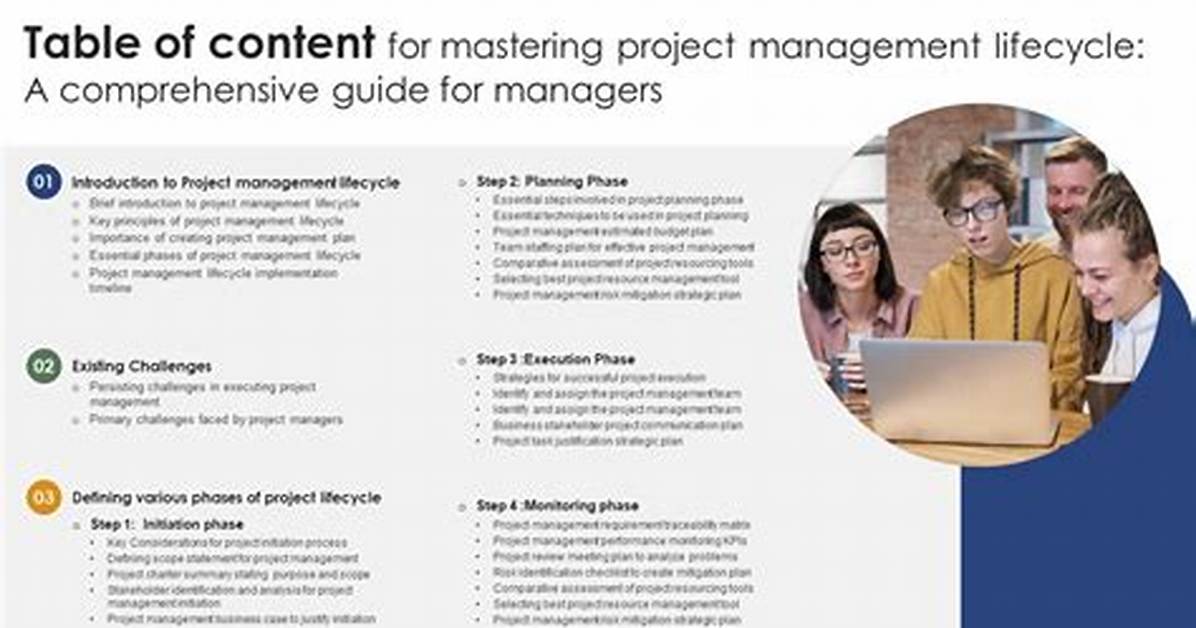
Every project follows a structured lifecycle, which typically consists of five key phases: initiation, planning, execution, monitoring and control, and closure. Each phase plays a critical role in ensuring the successful completion of the project.
Initiation Phase
The initiation phase involves defining the project's scope, objectives, and feasibility. During this stage, stakeholders identify the need for the project and determine whether it aligns with organizational goals.
Planning Phase
In the planning phase, a detailed roadmap is created, outlining the tasks, timelines, resources, and budgets required to complete the project. This phase also involves risk assessment and contingency planning.
Execution Phase
The execution phase is where the actual work of the project takes place. Teams implement the plans developed during the planning phase, delivering the project's deliverables according to the schedule.

